Appliances Acting Up After a Storm or Power Outage? Your Post-Outage Checklist
July 1, 2026 · 6 min read
The storm passes, the power blinks back on, and there’s that little collective cheer across the neighborhood — right before everyone starts opening the fridge to see what survived. Here in Palm Beach County, the wind gets all the attention, but the thing that actually takes out appliances is quieter: the power surge when electricity comes rushing back after an outage. If something’s acting up after a storm, here’s how to check it safely, in a sensible order, before you assume the worst.
First, a quick safety word
If you see water around any appliance, smell burning, or see scorch marks, don’t plug anything in or flip it on. Flooding plus electricity is genuinely dangerous, and a burnt smell means a component already gave out. When in doubt, leave it off and call a pro. No appliance is worth a shock or a fire.
Start with the refrigerator and freezer
These are the ones everybody worries about first, and for good reason — it’s your food and, in summer, it’s a race against the heat. Work through this:
- Give it a beat before judging it. After the power returns, a fridge may take a few hours to pull back down to temperature. Keep the doors closed and check again later before deciding it’s broken.
- Check that it’s actually running. Listen for the compressor and feel for cold air. If it’s dead silent and warm after a few hours, that points to a surge-damaged control board or compressor.
- Know the food-safety rule. A full freezer holds safe temperatures roughly 48 hours if you keep it shut; the fridge, about 4 hours. When in doubt, throw it out — it’s not worth a stomachache during storm cleanup.
- Watch for the sneaky one: a fridge that runs but won’t get cold, or a freezer that frosts over oddly. Those are classic post-surge symptoms.
Then the electronics and the TV
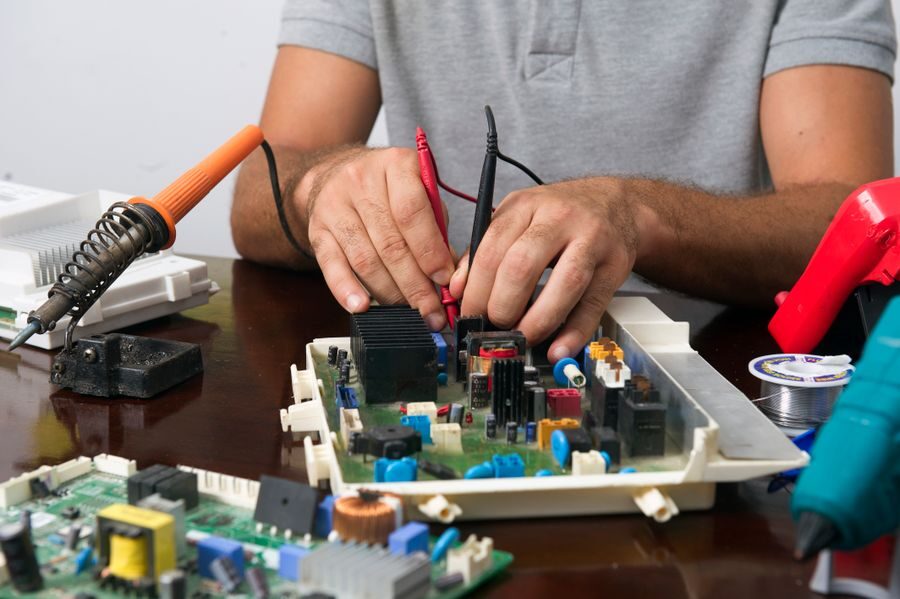
Anything with a sensitive circuit board is what surges love to fry. If your TV won’t turn on, shows a black screen with sound, or keeps restarting after the storm, a surge-damaged power board is one of the most common causes — and, good news, it’s often a far cheaper fix than a new TV. Same story for the control boards inside microwaves, dishwashers, and front-load washers. This is exactly why surge protectors earn their keep down here; if this storm caught you without them, add it to the list before the next one.
Work through the rest
Give your other major appliances a quick test run and watch for anything that won’t start, trips the breaker, throws a new error code, or makes a noise it didn’t make before. A tripped breaker or GFCI outlet is worth checking first — sometimes the “dead” appliance just needs a reset at the panel, not a repair. Take a minute to reset those before assuming the worst.
The fast way to figure out what you’re looking at
Not sure whether that new noise or error is a simple reset or a real repair? Our free Symptom Checker walks you through it appliance by appliance — pick what’s acting up, and it’ll tell you the likely cause, a safe self-check, and honestly whether it’s a DIY fix or one for a pro. It’s the quickest way to sort the “no big deal” from the “yes, call someone.”
When it’s time to call
If an appliance won’t start, runs but won’t do its job, trips the breaker, or smells hot, that’s the point to bring in help — those are usually surge-damaged parts that need proper diagnosis. As a small, owner-operated family business, the same trusted person answers the phone and does the work, so you get a straight answer about what the storm actually hurt and what it didn’t. Here’s what we cover for in-home appliance and TV repair across Lake Worth Beach and Palm Beach County.
Storm knocked something out of commission? Book a repair online or call us at (561) 533-9840, and we’ll help you get back to normal — and talk you through protecting things before the next one rolls through.
Ready when you are
Same-week, in-home repair across Palm Beach County. Honest pricing, 90-day guarantee.