Cloudy Glasses and White Film From the Dishwasher? Blame Our Water First
July 29, 2026 · 6 min read
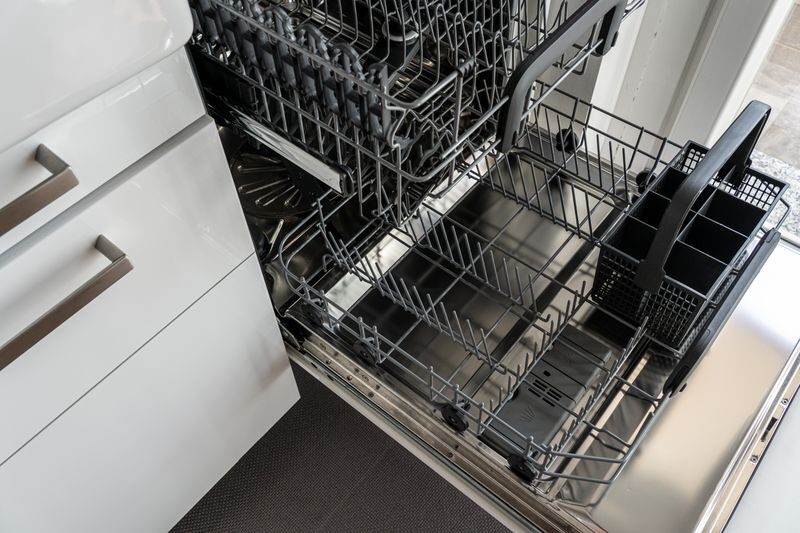
You unload the dishwasher, hold a glass up to the light, and it looks like it spent the afternoon at the beach — hazy, chalky, faintly gritty. Then someone’s coming over for dinner and you’re standing at the sink hand-drying every glass in the cabinet with a dish towel. It’s one of the most common calls we get from Palm Beach County kitchens, and here’s the reassuring part: most of the time the dishwasher is working exactly as it should. The water going into it is the problem.
First, the two-second test that tells you everything
Before you change a thing, figure out which of two very different problems you have. Take a cloudy glass, dampen a cloth with a little white vinegar, and wipe a small area.
- The haze wipes off and the glass looks clear again? That’s mineral film — hard-water deposits sitting on the surface. Completely fixable, and everything below applies to you.
- The glass still looks dull, milky, or scratched? That’s etching — microscopic damage to the glass itself. Etching is permanent. No product will bring those glasses back, but you can absolutely stop it from happening to the rest of your set.
Knowing which one you’re looking at saves you from buying a cabinet full of products that were never going to help.
Why South Florida water does this
Our drinking water comes up out of limestone, and limestone means minerals — calcium and magnesium, mostly. That’s hard water. It’s perfectly safe to drink, it just leaves its signature on everything it dries on: the spots on your shower door, the crust on your faucet aerator, and yes, the film on your glassware. Your dishwasher runs that same water through a heat-dry cycle, which is essentially the ideal way to bake minerals onto a surface. Nothing has failed. Chemistry is simply doing its thing while you’re at the pool.
The fixes that actually work, in order
Work down this list. Most people see a real difference after the first two.
- Use rinse aid, and keep the dispenser full. This is the single biggest one, and the step most people skip. Rinse aid breaks the surface tension so water sheets off the glass instead of drying in place as mineral spots. On hard water it isn’t optional — check the dispenser monthly.
- Run a descaling cycle. A citric-acid dishwasher cleaner or a dedicated descaler, run on an empty hot cycle, dissolves the buildup already coating the interior, the spray arms, and the heating element. On our water, once a month is fair.
- Check your detergent dose — and lean lower. Too much detergent in soft-ish loads is a leading cause of etching, the permanent kind. If you’re using pods and washing small loads, you may simply be over-dosing. Powder or gel lets you dial the amount down.
- Stop pre-rinsing so thoroughly. Modern detergent needs some food soil to work on. Scrape plates, don’t wash them.
- Clean the filter. Pull the cylindrical filter from the bottom of the tub, rinse it, and scrub the mesh. A clogged filter recirculates dirty water over everything, which reads as “film” too.
- Make sure the water is genuinely hot. Run the kitchen tap until it’s hot before you start the cycle, so the dishwasher isn’t beginning with a tub of cold water. Around 120°F at the tap is the usual target — much hotter than that starts contributing to etching.
- Skip the heated dry on glassware. Rinse aid plus an air-dry setting gives you better results with less baked-on mineral.
When it really is the dishwasher
Sometimes the water isn’t the whole story. It’s worth having someone look at the machine when you notice:
- The dishes come out barely warm even on a heated cycle — often a failed heating element, which also means poor cleaning and poor drying.
- Spray arms that stay clogged after you’ve cleaned the holes, or one that doesn’t spin freely by hand.
- Gritty residue on the dishes, not just haze — that points at drainage or the filter and sump, not minerals.
- Film that showed up suddenly and never used to happen on the same water and the same detergent. A change that abrupt usually has a mechanical cause.
Those are the points where a proper diagnosis beats another bottle of rinse aid. Here’s what we cover for dishwasher repair across Lake Worth Beach and the surrounding area, with the price given to you up front before any work starts.
Not sure which camp you’re in?
Our free Symptom Checker now includes this exact symptom under Dishwasher, along with the likely causes and the honest DIY-or-pro call. It takes about thirty seconds and costs nothing, which is a better opening move than replacing a machine that’s fine.
If your glasses still look foggy after you’ve worked the list, we’re glad to take a look. As a small, owner-operated family business, the same trusted person answers the phone and does the work — so you’ll get a straight answer about whether it’s your water or your dishwasher. Book a repair online or call us at (561) 533-9840.
Ready when you are
Same-week, in-home repair across Palm Beach County. Honest pricing, 90-day guarantee.