Microwave Runs But Won’t Heat? Here’s What’s Going On (and When to Replace It)
June 7, 2026 · 5 min read
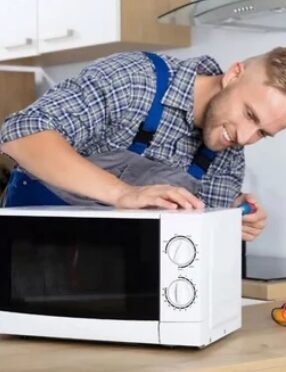
It's one of the more frustrating kitchen surprises: you press start, the light comes on, the turntable spins, you hear the familiar hum — and then last night's Pollo Tropical comes out exactly as cold as it went in. A microwave that runs but doesn't heat is a common problem, and the good news is that it's usually one of a handful of specific causes.
First, a serious safety word
Please read this before you think about opening anything up. A microwave stores a powerful high-voltage charge inside a part called the capacitor, and that charge can remain dangerous even after the unit is unplugged. The voltage inside a microwave can be lethal, and it doesn't go away just because the cord is out of the wall. Internal microwave repair is genuinely one of the few appliance jobs that can seriously hurt you.
So the rule is simple: the safe checks below are fine for any homeowner. Anything that involves opening the cabinet or touching internal parts must be left to a professional with the training and tools to discharge that capacitor safely.
Safe checks you can do right now
- Confirm it's actually not heating. Put a microwave-safe cup of water in and run it for one minute. Carefully check whether the water feels warmer. Sometimes the issue is weak or uneven heating rather than none at all.
- Check for a demo or showroom mode. Some microwaves have a demo mode that lights everything up but never heats. Check your owner's manual for how to turn it off. It catches a lot of people.
- Make sure the door closes firmly. Microwaves rely on door switches to confirm the door is fully shut before they'll heat. If the door isn't latching cleanly, the unit may run without heating as a safety measure.
- Don't run it empty. Running a microwave with nothing inside can damage it. Always have at least a cup of water in there when testing.
What's usually going on inside
When the safe checks come up empty, the cause is typically one of these parts — each needs a pro, because each lives in that high-voltage area:
- A failed magnetron. The part that actually creates the heat. When it goes, everything else runs normally but food stays cold.
- A blown diode. Helps deliver the high voltage the magnetron needs. A frequent culprit for this exact symptom.
- A bad high-voltage capacitor. The same part that holds that dangerous charge can wear out and stop the heating.
- Faulty door interlock switches. If one fails, the unit may power on and spin but refuse to heat.
These all look similar from the outside, so figuring out which it is takes proper testing — that's a big part of what a microwave repair visit involves.
Repair it or replace it? The honest answer
Countertop microwaves are often inexpensive enough that replacement just makes more sense, and we'll tell you that honestly. Over-the-range and built-in microwaves are a different story — they're expensive to buy and a pain to swap, so they're usually well worth repairing. Our rule of thumb: repair it if the fix costs less than about half the price of a comparable new unit.
If your microwave is running but won't heat, you don't have to guess. As a family-run, owner-operated shop right here in Lake Worth Beach, the same trusted person comes to your home, diagnoses it safely, and gives you upfront flat pricing. Book a repair or call us at (561) 533-9840.
Ready when you are
Same-week, in-home repair across Palm Beach County. Honest pricing, 90-day guarantee.